


From mixed waste to stable fuel, a well-designed RDF line integrates seven key engineering steps — including sorting, shredding, drying, and pelletizing. Each phase affects energy value, cost, and environmental compliance. With modular design and MES integration, you can achieve 90%+ system uptime and track every ton from input to output. Learn how modern RDF plants process up to 500 tons/day while reducing OPEX and emissions.
The refuse derived fuel technology relies on a systematic, multi-stage process to convert mixed municipal and industrial waste into a homogeneous, high-calorific alternative fuel. A well-engineered RDF plant can process up to 500 tons of waste per day, achieving energy values as high as 18–22 MJ/kg in the final fuel.
Initial waste intake involves weighbridges and visual inspection. Materials are segregated using a combination of manual and automated (optical, ballistic) sorting units. Metal and inert removals increase downstream process efficiency by up to 30%.
Shredders reduce waste size to 200–300 mm for easier handling. A typical RDF plant employs twin-shaft shredders rated at 25–35 tons/hour, consuming 0.25–0.35 kWh/kg.
Moisture reduction is crucial to enhance energy content. Belt dryers or rotary dryers bring waste moisture from ~35% to under 15%, increasing calorific value by over 40%. NIR (Near-Infrared Reflectance) sensors optimize real-time moisture control.
Post-drying, waste is shredded again to under 80 mm and screened to eliminate non-combustibles. Proper screening ensures 90% of RDF meets size uniformity specs, which directly affects combustion performance.
Ferrous and non-ferrous metals are extracted, improving fuel purity and preventing downstream equipment wear. Plants equipped with eddy separators see maintenance cost reductions of 15% annually.
Final RDF is compressed into uniform pellets or compact bales. Pelletization increases bulk density by 60%, enhancing transportation efficiency.
The finished RDF is stored in silos or covered bunkers with MES (Manufacturing Execution System) integration for inventory and dispatch control.
Modular design enables phased capacity expansion and easier technology upgrades. For example, a 250 TPD line can be scaled to 400 TPD without core redesign. System integration using SCADA allows real-time performance monitoring and remote troubleshooting.

| Process Stage | Key Equipment | Target Output/Performance |
|---|---|---|
| Waste Reception | Conveyor, Sorters | Up to 500 TPD intake |
| Primary Shredding | Twin-shaft Shredder | 200–300 mm output @ 30 TPH |
| Drying | Rotary/Belt Dryer | Moisture ↓ from 35% to <15% |
| Secondary Shredding | Fine Shredder, Screener | Output <80 mm; >90% uniformity |
| Metal Separation | Magnetic + Eddy Systems | Ferrous & non-ferrous metal extraction |
| Pelletizing/Baling | RDF Pellet Mill, Baler | 60% increased bulk density |
| Storage & Dispatch | Silos, Loader, MES | Real-time loadout via SCADA interface |
All seven process stages are engineered to maximize energy recovery while minimizing operating costs and environmental risks.
Get Your Tailored RDF Production Workflow Design – Connect with Our Engineering Experts Today.
Quality RDF starts with precision equipment. The impact of core machinery—crushers, dryers, and screeners—on refuse derived fuel specification is often underestimated.
Primary shredders must handle mixed materials including plastics, textiles, and light metals. Shredders with torque sensors improve feed consistency and reduce blade wear by 20%. Double-stage shredding ensures optimal particle size for efficient drying and combustion.
Moisture content heavily influences fuel value. An RDF dryer should reduce moisture from 35% to 15% using <0.3 kWh/kg energy. Technologies like heat recovery and NIR-based feedback loops are now standard in high-performance dryers.
Vibrating or trommel screens separate fines and oversize materials. Plants maintaining a screening accuracy of ±5 mm report 15% better boiler compatibility and fewer unburnt residues.
Correct equipment selection directly enhances energy efficiency and environmental compliance.
Partner with us to engineer a cost-effective RDF equipment lineup tailored to your facility.
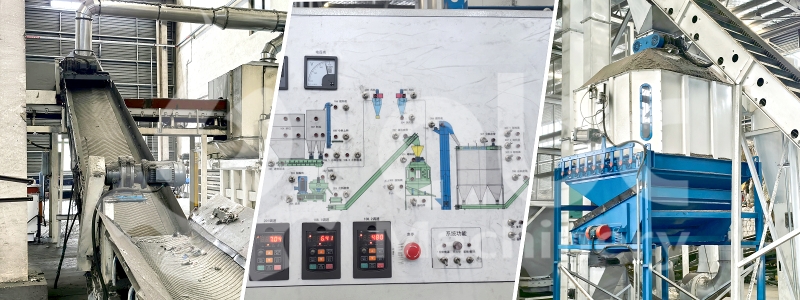
A high-calorific RDF fuel ensures better energy recovery. Key variables include feedstock selection, moisture level, and additive use.
Waste plastics and rubber can increase calorific values from 15 MJ/kg to over 22 MJ/kg. Meanwhile, controlled blending of low-grade biomass can stabilize combustion.
Additives like calcium carbonate reduce chlorine-related corrosion during combustion, extending boiler life by 25%. Pelletization increases density, resulting in 20% higher thermal efficiency during incineration.
Consult our process specialists to customize RDF fuel composition for your incinerator’s performance goals.
European RDF systems emphasize automation and emission control, with over 80% integrating real-time SCADA analytics. In contrast, Asian systems are increasingly hybrid, balancing automation with labor-driven cost models.
Understanding regional strengths enables better investment strategies in refuse derived fuel technology.
Refuse derived fuel specification is shaped by parameters like calorific value, chlorine content, particle size, and ash residue.
Standardized grades promote international trade compliance and ensure consistent boiler performance.
Talk to our QA team for assistance in implementing internationally accepted RDF testing protocols.
In 2023, a Southeast Asian city commissioned a 300 TPD RDF plant converting municipal solid waste into industrial-grade fuel.
Key highlights:
Get Your Customized RDF Engineering Layout Plan – Speak to Our Project Team Today.